Everything behind your tan, published in full: the chemistry of color, the way your skin
receives it, how to prepare, when to rinse, and how to make it last. Where the science is well
established, it is cited at the end. Where something comes from Jana's experience, it says so.
Active
DHA · the Maillard reaction
Develops
About 24 hours, every formula
Lasts
7 to 14 days
Your tan, step by step
Start with your rinse time.
Choose your formula to see when you can rinse and what to do until then. Jana gives you your own rinse time at the appointment; this is the planning guide.
Choose your formula and your instructions appear here.
Rapid Development · rinse after2, 4 or 6 hours2 hours for a light result, 4 for medium, 6 for deep. Every formula develops over about 24 hours; the rinse is when you can shower, not when the color is finished.
Until your rinse: wear dark, loose clothing and keep the color dry. The bronzer you see first is a guide color that rinses away; the lasting color develops under it.
At your rinse time: make the first rinse lukewarm water only, then pat dry.
For the first 24 hours: skip saunas, steam, hot yoga, hard workouts, long baths, hot tubs and swimming.
Every day after: moisturize with products free of mineral oil, and wear your usual sunscreen.
When it fades: a tan lasts 7 to 14 days. It fades evenly, and a gentle glove exfoliation before your next tan helps.
Unity NR · rinse after2, 4 or 6 hours2 hours for a light result, 4 for medium, 6 for deep. Every formula develops over about 24 hours; the rinse is when you can shower, not when the color is finished.
Until your rinse: wear dark, loose clothing and keep the color dry. The bronzer you see first is a guide color that rinses away; the lasting color develops under it.
At your rinse time: make the first rinse lukewarm water only, then pat dry.
For the first 24 hours: skip saunas, steam, hot yoga, hard workouts, long baths, hot tubs and swimming.
Every day after: moisturize with products free of mineral oil, and wear your usual sunscreen.
When it fades: a tan lasts 7 to 14 days. It fades evenly, and a gentle glove exfoliation before your next tan helps.
Ultra Dark · rinse after8 to 12 hoursUltra Dark is not a rapid-rinse formula. Every formula develops over about 24 hours; the rinse is when you can shower, not when the color is finished.
Until your rinse: wear dark, loose clothing and keep the color dry. The bronzer you see first is a guide color that rinses away; the lasting color develops under it.
At your rinse time: make the first rinse lukewarm water only, then pat dry.
For the first 24 hours: skip saunas, steam, hot yoga, hard workouts, long baths, hot tubs and swimming.
Every day after: moisturize with products free of mineral oil, and wear your usual sunscreen.
When it fades: a tan lasts 7 to 14 days. It fades evenly, and a gentle glove exfoliation before your next tan helps.
Bronze Organics · rinse after8 to 12 hoursAn evening tan, slept on and rinsed in the morning, works well. Every formula develops over about 24 hours; the rinse is when you can shower, not when the color is finished.
Until your rinse: wear dark, loose clothing and keep the color dry. The bronzer you see first is a guide color that rinses away; the lasting color develops under it.
At your rinse time: make the first rinse lukewarm water only, then pat dry.
For the first 24 hours: skip saunas, steam, hot yoga, hard workouts, long baths, hot tubs and swimming.
Every day after: moisturize with products free of mineral oil, and wear your usual sunscreen.
When it fades: a tan lasts 7 to 14 days. It fades evenly, and a gentle glove exfoliation before your next tan helps.
Classic Bronze · rinse after8 to 12 hoursAn evening tan, slept on and rinsed in the morning, works well. Every formula develops over about 24 hours; the rinse is when you can shower, not when the color is finished.
Until your rinse: wear dark, loose clothing and keep the color dry. The bronzer you see first is a guide color that rinses away; the lasting color develops under it.
At your rinse time: make the first rinse lukewarm water only, then pat dry.
For the first 24 hours: skip saunas, steam, hot yoga, hard workouts, long baths, hot tubs and swimming.
Every day after: moisturize with products free of mineral oil, and wear your usual sunscreen.
When it fades: a tan lasts 7 to 14 days. It fades evenly, and a gentle glove exfoliation before your next tan helps.
Questions about your rinse? Call or text Jana at (831) 479-8266.
Part One
The Science of Color
DHA, the Maillard reaction, and why your color is your own
You have eaten this chemistry. It is the browning of bread crust, the deep color of roasted coffee and the sear on a steak, a family of reactions between sugars and amino acids known as the Maillard reaction. That the same category of chemistry produces a sunless tan is not a coincidence, and once you understand it, almost every piece of spray tan advice starts to make sense.
DHA does not stimulate melanin and involves no UV exposure. It works almost entirely in the outermost layer of skin, and very little of it reaches the bloodstream.
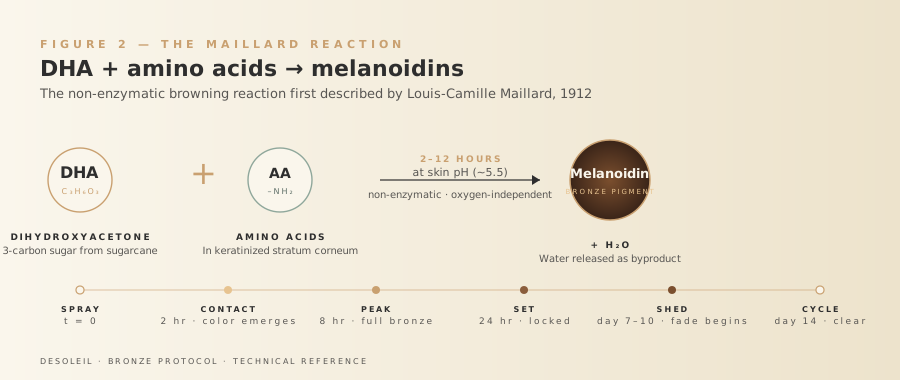
Figure 2 · The Maillard reaction: DHA and amino acids form melanoidins
Chemistry · The Maillard Reaction Explained
How DHA creates color in the outer skin
Dihydroxyacetone (DHA) is a small, simple sugar with three carbon atoms. The DHA used in tanning formulas is made by fermenting glycerin, which is typically plant-derived. In solution it is clear and unremarkable, and its transformation happens only when it meets skin.
DHA reacts with amino acids in the proteins of the stratum corneum, such as lysine and histidine, producing brown compounds called melanoidins. The first steps of that reaction are well understood; the later ones produce a complex mixture of compounds that chemists still have not fully mapped. These pigments become attached to the proteins of the outer skin cells rather than sitting on top of them, which is why a well-developed tan survives showers, swims and an ordinary day of wear.
The color fades as those cells are naturally shed, which is why gentle cleansing, moisturizing and avoiding friction help it last its full 7 to 14 days.
3
Carbon atoms in DHA
~1 hr
Color begins to appear
24 hr
Development, every formula
7–14 d
Typical tan life
0
UV exposure involved
Skin and pH
Healthy skin keeps its surface slightly acidic, on average a little below pH 5, and DHA is most stable in a mildly acidic environment. Alkaline products such as traditional bar soap and baking-soda scrubs can raise the surface pH for a time and are best avoided before a sunless tan. Keep skin comfortable and balanced. The Normalize Treatment, a pH-balancing pre-treatment with aloe and humectants, is an optional add-on built around this idea.
Chemistry · Erythrulose
A second, slower sugar
Many professional formulas pair DHA with erythrulose, a related sugar that occurs naturally in red raspberries and is produced commercially by fermentation. It reacts in the same way as DHA but more slowly, and the combination is generally used to soften the initial color and support a more gradual, even fade.
Part Two
How Your Skin Renews
The living surface every tan is built on
Before the formula and before the technique, there is your skin. It is not a passive surface. It is an organ, alive and constantly changing, and the condition of your skin on the day of your appointment reflects how it has been treated over the preceding weeks.
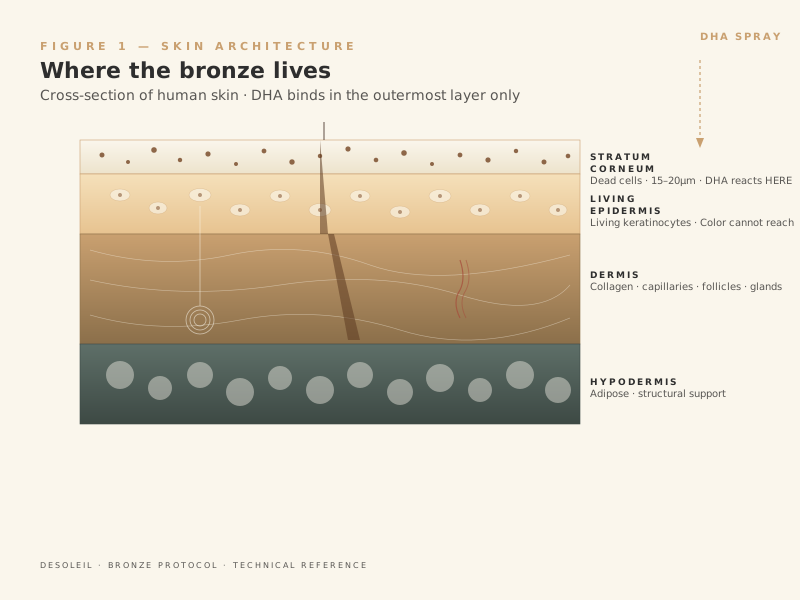
Figure 1 · Skin architecture: DHA works almost entirely in the outermost layer
Biology · The Epidermis
The stratum corneum: where a tan does its work
The epidermis is built from the bottom up. At its base, new cells are made continuously, and over the following weeks they travel upward, flattening and hardening as they go. By the time they reach the surface they are flat, protein-rich scales called corneocytes, overlapping like roof tiles. Together they form the stratum corneum, which on most of the body is only about fifteen to twenty cells deep and thinner than a sheet of paper.
The full passage from the base of the epidermis to the surface is estimated at roughly forty to fifty-six days, and the outermost layer alone turns over in about three weeks in younger adults, more slowly with age. A tan fades because the colored cells are shed and replaced.
Why some areas take more color
Skin is thickest on the palms and soles, and thicker on elbows, knees and ankles than on the inner arm or the chest. Thicker skin presents more surface for the tanning reaction, which is why those areas get particular attention at every appointment.
Elbows · Knees · Ankles
Thicker skin
More surface for the reaction, so these areas tend to take color more intensely. Give them extra attention with the glove in the days before.
Face · Inner Arms · Chest
Thinner skin
Takes color more delicately. The face is also cleansed more often and meets more active skincare, which is why it often fades before the body.
Hands & Feet
Constant use
Where the skin changes texture, the transition needs to be invisible, so these areas get precise application.
Preparation is weeks, not a night
The most common mistake a first-time client makes is assuming preparation starts the night before. You cannot fix a month of neglect in a single evening, but a few weeks of simple, consistent care make an enormous difference: exfoliate gently at every shower, daily, ideally for weeks, and that includes the day of your appointment.
Consistency matters far more than intensity, and if you only manage one session before you arrive, that one still helps.
Good to Know · Your Skincare and Your Tan
You do not need to stop anything on your own
Mention what you use and Jana plans around it. For any prescription product, your doctor has the final word. What follows comes from the studio: these are patterns clients often notice, not established science.
Speeds fading: retinoids (retinol, tretinoin), exfoliating acids such as glycolic, lactic and salicylic acid, scrubs and chemical peels. Can lighten color: benzoyl peroxide is an oxidizing agent and can lighten a tan where it is applied. Generally compatible: simple moisturizers, niacinamide and hyaluronic acid. Also worth mentioning: clients often notice that hormonal changes affect how evenly color takes, and that chlorine shortens a tan.
Waxing is best done before a tan rather than during one. Microneedling, laser procedures and dermaplaning should be fully healed before you are tanned; your provider can tell you when.
Part Three
Preparation
Ideal habits, never conditions for booking
What helps most is not a dramatic regimen but a steady habit: gentle exfoliation, regular moisturizing, plenty of water and daily sunscreen. Everything below is the ideal. Nobody is turned away for how they prepared. Skipping prep can affect the look, life and quality of the tan, and Jana will tell you so at your appointment, kindly.
From Jana · Hydration
Outside in, and inside out
In my experience, hydration works from both directions: moisturizer on the outside, water on the inside. Dehydrated skin shows on a tan right away, as a crackly look, because the tan sits in the outer layers. Consistently moisturized skin in the days and weeks before takes color more evenly. On the day itself, skin should be clean and completely dry.
Retail · Infinity Sun
Infinity Sun Exfoliating Body Masque
A nonabrasive masque made with pineapple enzyme. It is not a scrub. Apply to dry skin for 10 to 15 minutes, rinse, and wait at least 2 hours before tanning. Available in-studio and at desoleiltan.com/shop, alongside the full product range.
The weeks before
Exfoliate gently at every shower. A textured exfoliating glove with light pressure is all you need. Daily is ideal, including the morning of your appointment. Please skip body scrubs; many leave an oily residue. Give extra attention to elbows, knees, ankles and the backs of the heels.
Moisturize regularly. A simple, fragrance-light body lotion used consistently keeps the surface smooth and even.
Drink water and wear sunscreen. Sunscreen prevents both sunburn and new tan lines. If you burn and begin to peel, reschedule until the skin has settled. Tanning over a sunburn is a no.
Remove any old self-tanner. Residue from a previous self-tanner makes new color uneven, so exfoliate it away in the days before.
Hair removal
Ideally, shave or wax at least a day before. In Jana's experience, freshly removed hair can leave follicles that show as tiny dark dots, and waxed skin can be tender for a day or so. Ideal timing is not always possible, and a gentle shave the morning of is fine.
Schedule manicures, pedicures and facials before your tan. Soaking, exfoliating tools and heat all lift fresh color.
The day of
Shower, exfoliate gently with the glove, and dry thoroughly. Then leave your skin alone.
No moisturizer on appointment day. No lotion, oil, deodorant, perfume or makeup on any area being tanned. Moisturize as usual up to the day before.
No deodorant or antiperspirant. Deodorant residue causes uneven or oddly toned color under the arms, so arrive without it and apply it after your appointment.
What if I forgot and already applied deodorant?
Wipe the underarm thoroughly with a damp cloth and let it dry completely before your appointment, and mention it to Jana.
What about oil-based makeup or serums on my face?
Keep the face clean and product-free on the day. Facial tanning needs the cleanest possible surface for even color.
Part Three · Continued
What to Wear
To your appointment, and for the rest of the day
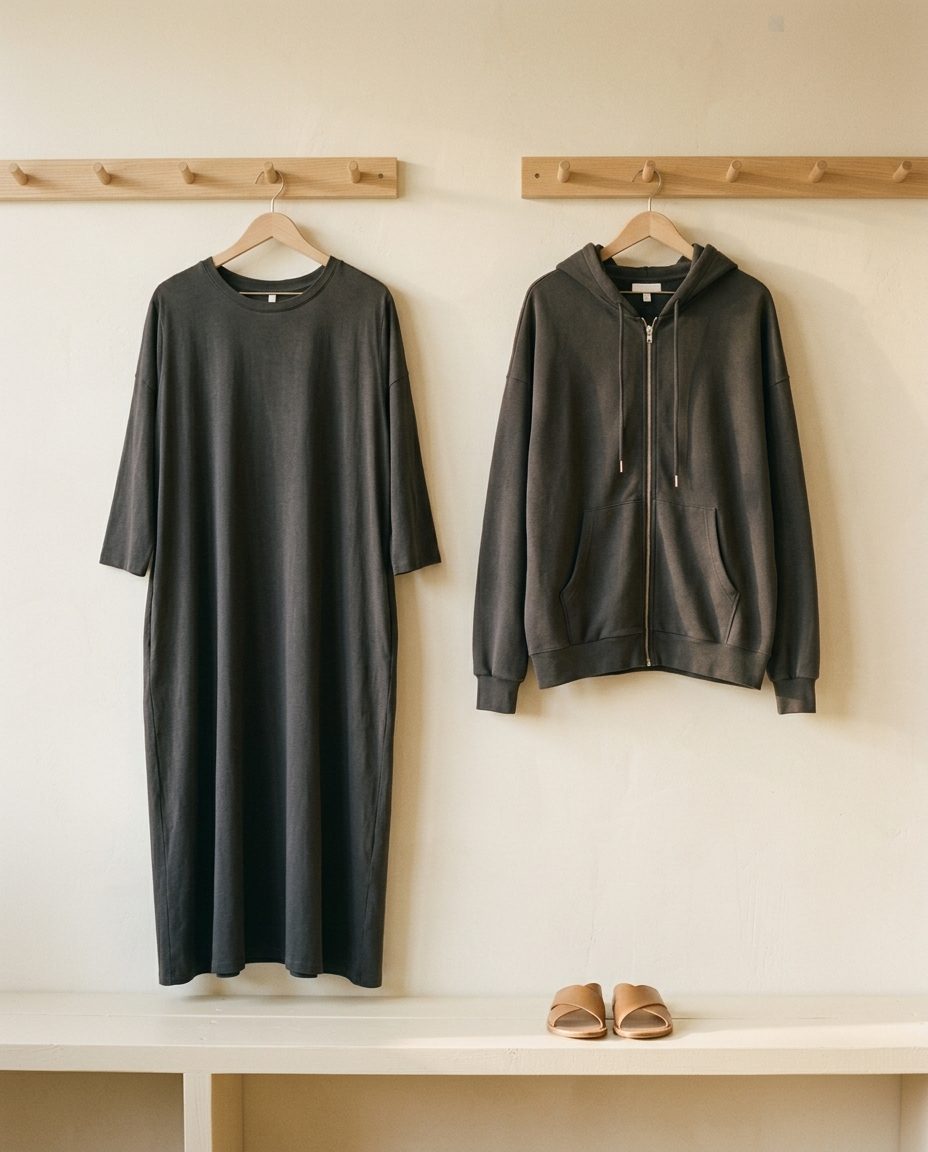
Choose dark, loose clothing that fully covers your skin for the trip home. The cosmetic bronzer can transfer onto light or tight fabric, and snug waistbands, bra straps and elastic can leave pale lines while the tan develops.
Wear to your appointment
A zip-up hoodie An oversized T-shirt Loose pants or a maxi skirt Soft dark underwear, no elastic waistbands Flip-flops or loose shoes
Save for after rinse
Tight jeans or leggings Underwire or padded bras Tight socks or compression wear Structured waistbands or belts Pale and fitted pieces
Accessories
Hair off the neck and ears before application Jewelry removed before you arrive A dark towel for your first rinse
For sleeping
Dark, loose sleepwear Dark sheets for the first night No tight socks or waistbands overnight Let the formula dry fully before lying down
✦
The color washes out of most fabrics, though that cannot be guaranteed for every material, because the bronzer is cosmetic. Keeping your pale and fitted pieces for another day removes the worry entirely.
In-Studio Finish · $15
Dolce Dust
A finishing powder applied after your tan, in shimmer or matte. Infinity Sun says it cuts transfer and stickiness before your rinse. Ask for it at your appointment.
Part Three · Continued
The Appointment
About twenty minutes, and it starts with a conversation
Most appointments take about twenty minutes, sometimes a little longer. Before anything is sprayed, Jana talks with you about your skin and undertone, your week, any event on the calendar and how deep you would like to go, and the formula is chosen from that conversation. If the one you booked online turns out not to be the best fit for the day, you can switch at the appointment.
You stand for the application. Jana guides you through a few simple positions so every contour, including the backs of the arms and the sides, is covered evenly.
For the face, close your eyes and lips and hold your breath for a moment. It keeps the formula away from the eyes, lips and airways, as the FDA advises.
You leave with a personal rinse time. The numbers on this page are planning guidance; the time Jana gives you is the one to follow.
Two different things, and why the difference matters
The studio uses Infinity Sun solutions. The rinse removes the cosmetic guide color, while development continues quietly in the skin for about 24 hours with every formula. Rapid Development and Unity NR rinse sooner, and the rinse time sets the depth, but they develop over the same 24 hours as the others. This is why clients who rinse early and feel underwhelmed are so often delighted the next morning.
2 hr
Light
Rapid Development, Unity NR
4 hr
Medium
Rapid Development, Unity NR
6 hr
Deep
Rapid Development, Unity NR
8–12 hr
Overnight rinse
Bronze Organics, Classic Bronze, Ultra Dark
← LighterDeeper →
✦
Jana gives every client a personal rinse time at the end of the appointment. The times above are general planning guidance.
The first rinse · step by step
Lukewarm water only. Hot water is harder on freshly applied color. Keep the first shower brief.
No soap on the first rinse. Many traditional soaps are alkaline, and the reaction is still under way.
Pat dry with a soft, dark towel. Rubbing is a form of exfoliation, and on freshly tanned skin it can remove color unevenly.
The water runs brown, and that is exactly right. That is the cosmetic guide color leaving. By the next morning you will see what the tan is actually going to be.
✦
First time with Rapid Development or Unity NR? If you are unsure, rinse at the lighter end of your window. A lighter first result tells Jana what to adjust, and you can always go deeper next time.
Part Four · Continued
Making It Last
The first 24 hours, and the days after
The day after your appointment is the most important period in the life of your tan, and because so little seems to be happening, it is also the easiest to mismanage. The color is still deepening, and what you do during those hours shows for the rest of the week. If you have a morning surf at Pleasure Point or a long swim at Seacliff planned, give it until the second day.
The first 24 hours
Heat speeds development.Keep saunas, steam rooms and hot yoga out of the development window. If you have a standing class, book your tan around it.
Sweat and friction are the real risks.Heavy sweating can carry formula across the skin and leave streaks or patches. Save intense workouts for after the first 24 hours.
Water.Beyond your rinse, keep long baths, hot tubs and swimming out of the first day.
Stay loose.Tight waistbands, leggings and bra straps can leave pale lines. Keep to dark, loose clothing until your first shower.
Go easy in the sun. Wear sunscreen and avoid long stretches outdoors on the day of your tan.
After the first day
What extends a tan: regular moisturizing with a product free of mineral oil and exfoliating acids, gentle cleansing, shorter, cooler showers, and patting dry rather than rubbing.
What shortens a tan:friction from loofahs, rough towels and vigorous scrubbing; long hot showers and baths; chlorine and hot tubs; exfoliating acids and retinoids; dry, dehydrated skin.
Pools and the ocean. Rinse promptly after swimming and moisturize. Salt water is gentler than chlorine, but long exposure still speeds fading, and salt and sand are abrasive.
The fade. A well-cared-for tan fades gradually and evenly. As it reaches its final days, returning to gentle glove exfoliation evens the fade and prepares your skin for the next appointment.
What should I do if my tan is darker than I wanted?
With Rapid Development or Unity NR, rinsing earlier gives a lighter result. Once the color has developed, gentle exfoliation and time will soften it. Tell Jana afterward so you can adjust next time.
Part Five
Water, Weather & Surprises
When life does not pause for your tan
Salt water, beach days & pools
Salt water and chlorine both speed fading, but neither has to ruin a well-kept tan. Once the first 24 hours have passed, swim as you like with a little care before and after.
Before ocean or pool
Moisturize bronzed areas, then apply a waterproof sunscreen over the top.
After ocean or pool
Rinse with fresh, cool water promptly, pat dry, and moisturize afterward.
Chlorine pools
Clients often notice that chlorine and long soaks shorten a tan's life. Keep sessions reasonable and rinse off as soon as you are out.
Ocean & salt water
Salt water is gentler than chlorine, but long exposure still speeds fading, and sand is abrasive on the skin.
Rain before your rinse
01
Check the forecast before your appointment and plan a covered trip home if rain is likely.
02
Full-coverage loose clothing shields developing formula better than an umbrella.
03
If you are caught out, do not wipe or dab. Get indoors and let the skin air-dry. Rubbing streaks; air-drying does not.
Common surprises
01
Creases at the back of the knee and inside of the elbow. Stand naturally and let the skin dry before bending.
02
Pale lines from elastic and bra straps. Loose, elastic-free clothing until your first shower prevents them.
03
Sheet and pillow marks. Dark sheets, loose clothing, and let the formula dry fully before lying down.
04
A faint, biscuity scent as the tan develops. It comes from the tanning reaction itself and disappears with your first shower.
✦
When in doubt, do nothing first. Scrubbing, more product or re-wetting usually makes it worse. If you tanned with deSoleil, text (831) 479-8266 before doing anything; Jana keeps notes on every appointment and can advise specifically.
Part Five · Continued
Timing Your Appointment
Booked to the occasion that matters
Every formula develops over about 24 hours, so for most events one to two days before gives the color time to develop fully while it is still at its freshest. Jana has been timing tans to weddings, trips and performances since deSoleil opened.
Everyday events
1–2 days before
Weekend plans, a dinner, a casual shoot. Full development, and the first rinse well behind you.
Engagement photos, showers, parties
1–2 days before
Book one to two days before each event, since every formula develops over 24 hours.
Bridal trial
2–3 weeks before
At least two to three weeks out. It shows you the color in your own mirror, at your dress fitting and in the light where you will be photographed.
Wedding · final tan
2–3 days before
Two to three days before the ceremony, never the night before, so the color has fully developed and the first rinse is long behind you.
✦
Traveling? Book as close to departure as you can. Rapid Development suits a tight schedule, since you rinse within hours. If you are new to spray tanning and have a big trip ahead, do a trial first. Cabin air is dry, so a travel-sized moisturizer is worth the space in your carry-on.
Same-day appointments are by call or text only: (831) 479-8266. Online booking closes 12 hours ahead.
Part Six
The Formulas
What lives inside the bottle, and how the choice is made
A professional spray tan solution is a balanced system in which each group of ingredients has a job. The choice between formulas is made together in conversation, based on your skin tone, undertone, schedule, event and how deep you would like to go.
Inside the Bottle
Five overlapping systems
1 · Tanning system. DHA sits at the center, and some formulas add erythrulose for gentler, more gradual development.
2 · Bronzing system. The cosmetic bronzer gives immediate color and a visual map of coverage. Bronzer tones vary deliberately: a violet-based bronzer offsets excess yellow as cosmetic color correction, while golden or reddish-brown bronzers add warmth. Whatever the bronzer, it rinses away with your first shower.
3 · Hydration system. Humectants such as glycerin, aloe and hyaluronic acid help the formula spread evenly and keep skin comfortable as it dries.
4 · Skin-support system. Antioxidants alongside the bronzer, and soothing botanicals such as aloe.
5 · Stability system. DHA is most stable in a mildly acidic solution, so good formulas are buffered, packaged to limit light and air, and stored properly.
Most Popular · Shorter Rinse · $75
Rapid Development
A violet-based bronzer for a cool, even brown. Rinse at about 2 hours for light, 4 for medium, 6 for deep. A shorter rinse, not faster development: it develops over 24 hours like every formula. Book Rapid Development →
New · Neutral · $90
Unity NR
Niacinamide, hyaluronic acid and a peptide complex alongside a neutral-toned bronzer that sits well on almost any undertone. Made with EcoCert-certified DHA; labeled vegan, gluten free and nut free. The manufacturer describes it as sweat-resistant. Rinse at 2, 4 or 6 hours. Book Unity NR →
Botanical · $70
Bronze Organics
Certified organic, with organic plant extracts, hyaluronic acid and vitamins A, C and E, 13% DHA and a warm golden-brown bronzer for a soft, natural color. Rinse in 8 to 12 hours. Book Bronze Organics →
Traditional · $70
Classic Bronze
Infinity Sun's traditional formula, with a reddish-brown bronzer that reads as a natural, sun-warmed color. Rinse in 8 to 12 hours. Book Classic Bronze →
Deepest · $85
Ultra Dark
Two coats in one appointment. For competitors, ballroom dancers, performers under stage lighting and experienced clients who know they want to go dark. Rinse in 8 to 12 hours. Book Ultra Dark →
Plans · Three Tans
3-tan plans
Three tans in one formula, valid for twelve months: Bronze Organics or Classic Bronze $200, Rapid Development $215, Ultra Dark $245, Unity NR $260. Prices shown are full body and vary by coverage area. Jana has used Infinity Sun since deSoleil opened in 2007. See plans →
A pH-balancing pre-treatment with aloe and humectants, applied before your tan to help the color develop evenly, particularly on dry or uneven skin.
Add-On · $25 with a tan, $35 alone
Shimmer Hydration Elixir
A finishing layer of hydration and cosmetic shimmer that washes off with your first shower. For shimmer at an event, book a short return visit close to it.
Add-On · $25 with a tan, $35 alone
Anti-Aging Elixir
A silky, hydrating treatment enriched with botanical extracts that support a supple, soft skin feel. This elixir adds a smooth, pampered finish that enhances your skin's visible radiance and the overall uniformity of your tan. 0% DHA. Palmitoyl Pentapeptide-4, Ginseng & White Tea. Applied post-session, refreshing, hydrating, and sealing the bronze for a luminous look and luxurious studio finish.
Finish · $15
Dolce Dust
A finishing powder in shimmer or matte, applied after your tan. The manufacturer says it cuts transfer and stickiness.
✦
Not sure which formula you had last time? Text (831) 479-8266; Jana keeps notes on every client's history.
Part Six · Continued
Skin Tone & Undertone
Every tone, every undertone, one conversation
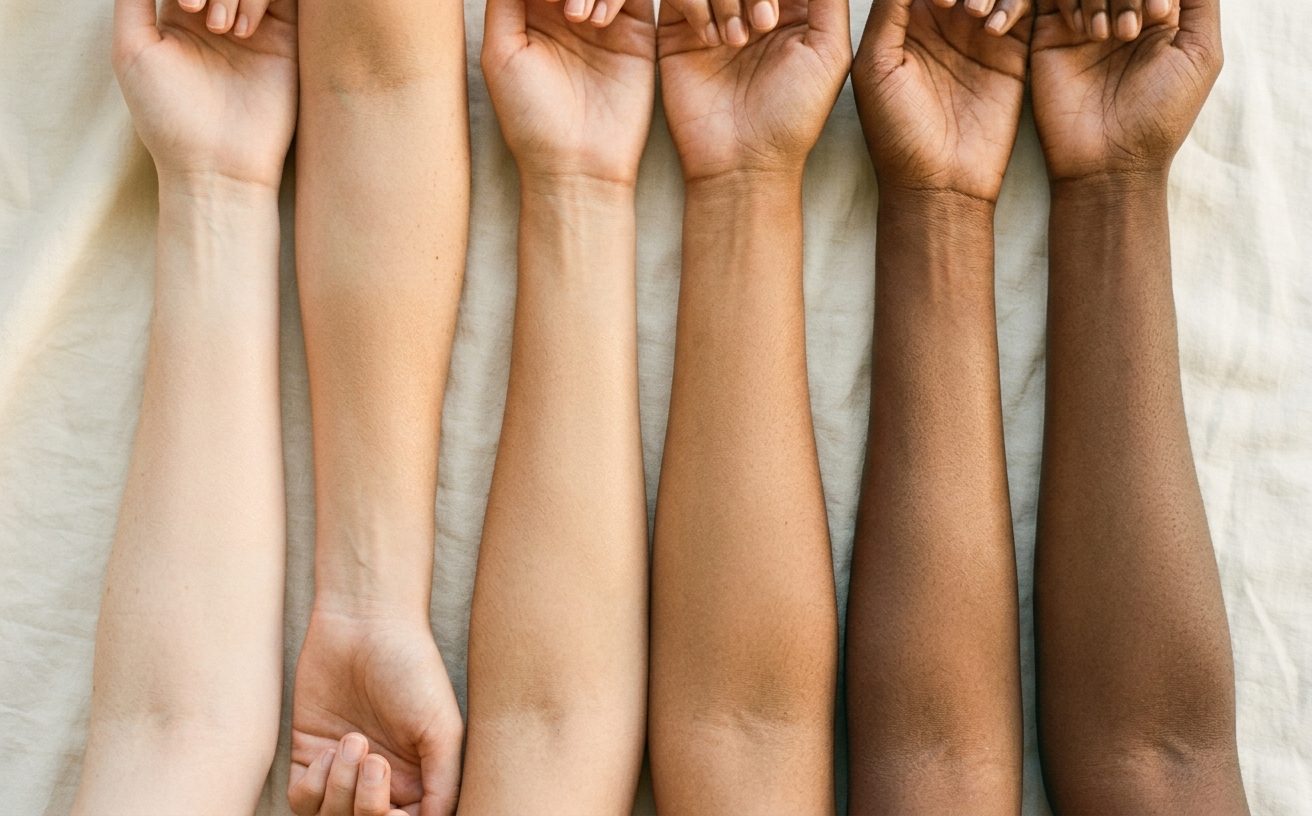
Because the tan is formed from your own skin proteins, no two people develop exactly the same color from the same formula. The chemistry of DHA works on every skin tone, and deSoleil has tanned clients across the full range of complexions, ages and reasons for coming in.
Fair skin
A soft, believable glow
Fair skin shows every shift in undertone. A neutral formula such as Unity NR, or an earlier rinse with Rapid Development, often suits fair skin that tends toward pink or red.
Medium & olive skin
Depth without excess warmth
Tends to take color beautifully, and the cooler brown of Rapid Development adds depth without excess warmth.
Deep skin
Evenness and luminosity
Sunless tanning is used less to darken and more to even tone and add luminosity. The wrong undertone can leave deep skin looking dull or ashy, so a rich, warm or neutral brown keeps it luminous.
✦
Most published users of sunless tanning have had lighter skin, so on deeper skin tones, practitioner experience carries more of the weight than published research does.
Undertone · the variable that picks the formula
Undertone is the underlying cast of the skin beneath its surface color. The pigments DHA produces sit in a warm brown range. On warm skin they read as a natural extension of what is already there; on cool or very fair skin, too much warmth can look unnatural, which is where formula choice comes in.
Cool Undertone
Pink, red, bluish
Best with a violet-based or neutral bronzer, and the right rinse time, to keep the result believable.
Neutral Undertone
Neither warm nor cool
The most versatile. Works across most formulas and can lean warmer or cooler by choice.
Warm Undertone
Golden, peachy, olive
The warm brown of DHA reads as a natural extension. Golden or neutral bronzers deepen existing warmth.
You may have heard of the Fitzpatrick scale. It describes how skin burns and tans in the sun, not its color or undertone, so it is not how Jana chooses a formula, although your history with the sun is always part of the conversation.
Why a tan can look unnatural
The color DHA produces sits in a warm brown range, and on fair or cool skin too much of it shows. That is why depth has to suit the skin it sits on, and why bronzer tone matters. An unnatural result is a failure of matching or technique, and each cause can be prevented.
A formula too warm or too deep for the skin. Fix: a violet-based or neutral formula, or an earlier rinse.
Uneven preparation or product residue. Fix: gentle glove exfoliation and clean, product-free skin on the day.
Sweat and friction during development. Fix: a quiet first 24 hours, loose clothing, and no hard workouts.
Questions
Safety & FAQ
Honest answers to the questions clients ask most
Is spray tanning safe?
DHA has a long record of use. The FDA lists it as a color additive for external use, and European safety reviewers concluded that DHA at up to 14 percent in spray tanning is not a risk to consumer health. The FDA has not approved all-over spraying in booths, and it advises that DHA should not be applied to the eyes, lips or mucous membranes or inhaled. For that reason, during the face and neck Jana asks you to close your eyes and lips and hold your breath for a moment. If you have a specific health concern, your doctor is the right person to ask.
Does DHA get into the body?
Very little. DHA reacts with amino acids such as lysine and histidine in the outermost layer of skin, the layer that is already on its way to being shed, and very little of it reaches the bloodstream. That is also why the tan fades as those cells are replaced.
Is spray tanning safe during pregnancy or while breastfeeding?
Research on DHA in pregnancy and breastfeeding is limited, and some dermatology references advise avoiding it during pregnancy as a precaution. Please ask your doctor before booking, and let Jana know so you can plan together.
Does a spray tan protect me from the sun?
No. A spray tan is not sunscreen. It does not protect you from sunburn and does not replace sunscreen. One study found that skin treated with DHA produced substantially more free radicals in sunlight than untreated skin, so wear sunscreen and plan your tan for a day when you are not outdoors for hours.
How long does a spray tan last?
Usually 7 to 14 days, depending on your preparation, aftercare and activities. The color lives in the outermost skin cells and fades as they are shed.
Why no soap on the first rinse?
Many traditional soaps are alkaline, and the tanning reaction is still under way. Rinse with lukewarm water only, keep the first shower brief, and pat dry with a soft, dark towel.
Can I work out or swim after tanning?
Wait until the first 24 hours have passed. Heavy sweat can move the formula and leave patches, and heat speeds the reaction. After that, swim and train as you like, rinsing promptly after swimming and moisturizing afterward.
Reference
The Protocol Checklist
The ideal, in one place. Do what you can; Jana will work with the rest.
The weeks before The Long Game
Gentle glove exfoliation at every shower, daily
Regular moisturizing and plenty of water
Sunscreen daily; no new tan lines, no sunburn
Skincare mentioned to Jana; nothing stopped on your own
The days before Refinement
Shave or wax, ideally at least a day before
Manicure, pedicure and facials before the tan
Old self-tanner exfoliated away
Moisturize as usual up to the day before
Day of Clean & Dry
Shower and exfoliate gently with the glove
No lotion, oil, deodorant, perfume or makeup on areas being tanned
Dark, loose clothing and loose shoes
Jewelry removed; hair off the neck
Rinse Your Personal Time
Rapid Development, Unity NR: about 2, 4 or 6 hours by depth
Bronze Organics, Classic Bronze, Ultra Dark: 8 to 12 hours
First rinse: lukewarm water only, no soap, brief, pat dry
First 24 hours Development
No saunas, steam rooms or hot yoga
No hard workouts, long baths, hot tubs or swimming
Loose clothing; dark sheets for the first night
Sunscreen, and no long stretches outdoors
After Making It Last
Moisturize regularly with a product free of mineral oil and exfoliating acids